Thursday, April 8, 2010

on DON'T LET ME BE LONELY


DON'T LET ME BE LONELY is a record of Claudia Rankine's experiences in a specific geographical location (the United States of America) during a specific point in time (the beginning of the twenty-first century). The book begins with the author reminiscing about a time "when no one I knew well had died." Rankine goes on to examine death, its representation in popular media, and various anecdotes relating to death. In the next section of the book (distinguished by a photograph of a static-covered television), the author begins by remarking, "I leave the television on all the time." She reports a dialogue she has heard on the television concerning death - how a young man (a juvenile offender) responds to an interviewer, when asked if someone (it is never specified whom) is dead, that the person "is dead to me." This exchange results in some confusion for the interviewer as the young man repeatedly states that the person is dead to him (in an emotional context - whether or not the person is physically dead is of little consideration to the young man).

Themes regarding life and death are evident throughout this book: we can find them in the author's examination of the life and death of hope, medicine and hospitals, film and television, the work of various writers, and (then-)current events. This is very much a book about figuring out one's place in the world (and trying to make sense of this position). As determining one's position has much to do with determining the position of other entities, the importance of these interactions with said entities is also prevalent in this book. It is interesting that the author often references the medium of television (often seen as a cold, impersonal means of interpersonal communication) throughout the text. The author also discusses loneliness in the context of interacting with others. At one point, she states "loneliness stems from a feeling of uselessness."

Near the end of the book, Ranice discusses the act of shaking someone's hand - how it is an act of asserting one's presence as much as it is a submission of one's self to another. According to the author, the transient nature of the balance between the two has "everything to do with being alive."

on TOTAL ECLIPSE


TOTAL ECLIPSE relates the story of a journey to a city in Washington "near Yakima" where the author, Annie Dillard, has traveled (with her husband, Gary Clevidence) to view a solar eclipse. Within the essay, the author speaks of the expectations she has about the eclipse and her experience viewing a partial eclipse in 1970; however, midway through the essay she explains that a partial eclipse "bears almost no relation to a total eclipse." She continues by explaining that witnessing a partial eclipse "bears the same relation to seeing a total eclipse as kissing a man does to marrying him, or as flying in an airplane does to falling out of an airplane." Within the story, the author's anticipation of the event turns to a form of grief (or even shame, perhaps (the images of the spectators "streaming down the hillsides", driving away in their cars, and never looking back hints that such an emotion may be shared)). Indeed, the human spectators (or, at the very least, the author) in this essay are humbled by the experience of the solar eclipse; despite having the advantages of modern technology and ideologies, they are still in awe of the magnificence of this natural occurrence ("From all the hills came screams," the author writes).

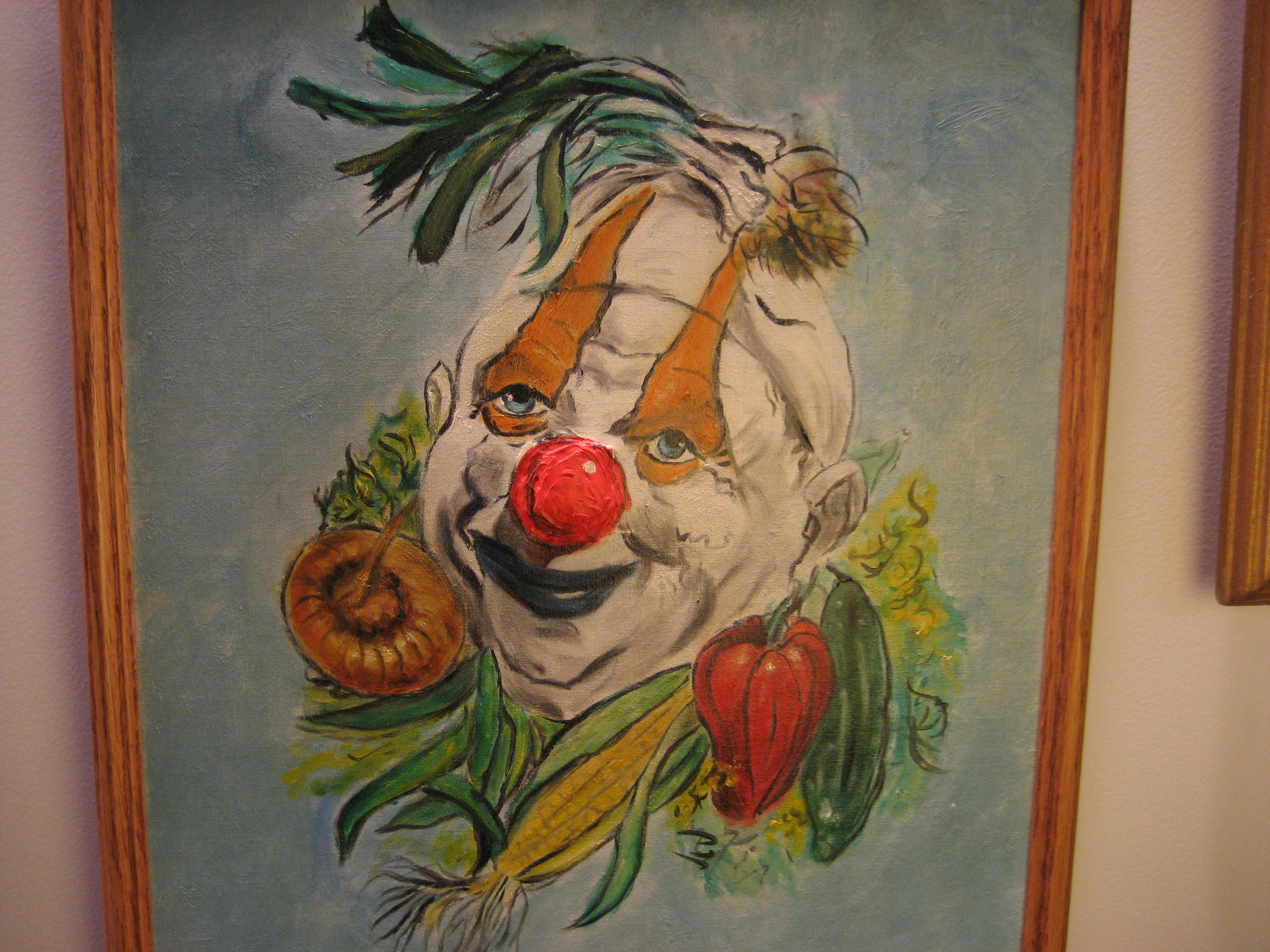
One of the difficult things with producing an essay that is a meditation on one's reaction to a specific phenomenon (and its emotional resonance) is keeping readers' attentions throughout the piece (it could be argued that keeping readers' attention is an important consideration when engaging in any type of writing). This seemed to be a problematic issue when we were discussing the essay in class. I would agree that this essay does seem to meander a bit. The author spends a considerable amount of space exploring seemingly mundane details (a painting in her hotel room of a bald clown's head made out of vegetables, the contents of a roadside diner, the hues that she experiences during the eclipse) in her journey to relate this story. In the end, however, this is still a moving piece of writing that reflects the author's struggle to make sense of her (and our) place in the natural world around us.

Thursday, March 25, 2010

LISTS


There are a number of the essays we're looking at in our Creative Writing class whose forms share certain characteristics with lists. For example, "Door No. Five" presents what sound like chapters from a book (or, perhaps numerous books): the first paragraph is composed of concepts/objects/places/sentient beings whose names begin with the letter "M". The next paragraph concerns ideas that begin with the letter "N", then "O", and, finally, a section of "P" groupings. The author of "NOTES TOWARD THE MAKING OF A WHOLE HUMAN BEING" also organizes the information within the essay into one long list of actions, events, and places (in the form of a complete sentence). "Things To Do Today" is also literally a list of actions, some of which are more abstract than others. As I mentioned in a previous post, the versatility of the essay is, for me, one of the most attractive qualities of this form: it can take many different shapes, the list being only of them.

Thursday, March 18, 2010

One Person's Party is Another's Cannibal Blood Festival


One aspect of the essay that I've always enjoyed is the versatility of the form. Within the essay packet that we're using this semester, one can find several different types of essays - some that read like short stories ("Red: An Invocation", "Mint Snowball") or monologues ("Sunday"), while others ("Mute Dancers: How to Watch a Hummingbird") have the feeling of a scholarly research paper. These, in and of themselves, are only a sampling of the various elements that span the form. Other types of essays include political manifestos, literary criticisms, and different examples of argumentative writing. An essay may take the form of prose or verse; it is flexible in many respects.

"Red: An Invocation" involves a series of recollections situated around a disparate allusion to Donner Pass, the infamous route through the northern Sierra Nevada mountains which is named after a party of 81 Californian-bound emigrates who, according to some reports, resorted to cannibalism after they were stranded by a snow storm for some months. This is, at times, a playful piece - the narrator is constantly correcting their own choice of vocabulary as they meditate on the cyclic nature of life and death via a scene involving a fox and a hawk.

In "Sunday" the narrator uses the context of food to examine race relations in the United States. The essay itself gives the impression of a monologue; the language is somewhat colloquial and the the lack of indentation or quotation marks when dialogue is used add to this effect. It is a beautifully written piece with lots of sensory details (the descriptions of the food are especially visceral) and descriptive passages that lead amazing to an incredibly poignant and powerful conclusion.

The title of "Mute Dancers: How to Watch a Hummingbird" gives the impression that the piece will be, in some part, didactic. It is, in fact, not, but it is an informative piece, full of information pertaining to hummingbirds. Diane Ackerman writes of their history and various behaviors before exploring an anecdote concerning the novelist Jeanne Mackin. Ackerman goes on to explain some of the relationships between hummingbirds and vanilla bean cultivation, and attempts to perhaps explore larger ideas of the relationships between various entities that co-exist in nature.

While these essays may present information in different ways, each is similar in that it is trying to present information that is intended to make the reader contemplate their relationship to the world around them.

Thursday, March 11, 2010

on TRANSLATION & NO THRU STREET


Renee Gladman's collection, Juice, consists of four short stories (or prose poems, depending on who you ask). The two that will be discussed and compared in this blog entry are "Translation" and "No Through Street."

Both stories address leaving a geographical location and returning to it to find said location changed in very remarkable ways - the narrator of Translation returns to their hometown to find it abandoned, the narrator in No Through Street returns to a city they have a close association with to find it transformed by the fame that their sister attracted by painting street signs. While the tale of someone leaving an area, transforming in some way, and returning is one of the oldest archetypal stories we know, these tales have a very unique feel that is largely a result of the author's style of storytelling. There is a very ethereal quality to this type of writing, which leaves the reader (or at least this reader) with the notion that these stories are dealing more with the subconscious level of our existence than the conscious realm. Indeed, there is a surreal quality to these tales that leads me to suspect that they are, indeed, explorations of much larger issues of culture and identity than the simple telling of stories. Perhaps much of this sensation is due to the fact that the narrators of the stories themselves are struggling to make sense of the changes that have occurred in regards to their proximity to the cultures they identify with: the narrator in “Translation” cannot recollect where they went to when everyone disappeared; in “No Through Street” the narrator wakes up outside of a hotel one year after leaving her hometown with “only water where memory should be.”

One of the very remarkable qualities that both of these stories share is that there is no evidence to suggest that any of the action that is described by the respective narrator of each tale has ever actually taken place (in the context of the stories themselves). While this may apply to any narrative that we don't witness ourselves in the physical world, it rings especially true in these stories. In the second paragraph of "Translation" the narrator states that "Most people have not heard of my town; even those with imagination will deny it." On the last page of “No Through Street” the narrator remarks that they have “given up the long-awaited homecoming;” whether the narrator is actually asserting that they never returned to the town or whether they are speaking to the fact that the woman who is alleged to be their sister claims to have never heard of them is unclear.

There is an interesting passage in “No Through Street” where the narrator talks about how a couple who were long-time neighbors of hers moved out after the “consuming crowds” that followed her sister’s fame arrived in town. The narrator states that the couple “left behind them an emptiness that caused panic in those remaining.” This feels somewhat comparable to the emptiness that the narrator from “Translation”, who survives on “sex and leaves,” must deal with. While both of these stories concern characters who have become separated from their families and culture, the narrator from "Translation" is attempting to preserve the aspects of their community that they find agreeable as opposed to the narrator from "No Through Street" who, by the end of the story, has abandoned the town once again (or perhaps never returned at all). They refer to the train as being "smart" for moving with "so many destinations that it essentially has none." There is also a great deal of emphasis placed on movement in the two pieces. After the narrator of “No Through Street” reads about the media frenzy engulfing her hometown, they are unable to move east and west for a number of days. Indeed, they are “unable to board a train in any direction.” In “Translation” the narrator is waiting for the return of their peers, unwilling to move as they are certain of the return of the society to which they belong.

To write only about the conceptual aspects of these pieces would be a huge disservice to the aesthetic qualities of the work. My feeling is that both of these pieces function as well as they do thanks heavily to the striking minimalism and the ethereal tone (mentioned earlier) that the author invokes. The space between ideas or moments in these stories serves them well as the narrators in each piece struggle with the emptiness around them (the abandoned city, the trains where the narrator can only view other people's lives). In my opinion, the form of these stories (or prose poems) are as important as the content.

Friday, February 26, 2010

What;'s your beef with adverbs, Janet?

It is interesting to read the section from Burroway's "Writing Fiction" entitled "Prose Rhthym." Perhaps the most interesting quality of this portion of the text is the author's apparent ambivalence towards rhythm in prose writing.

Burroway states, in reference to prose writing, that "on the whole the rhythm is all right if it isn't clearly wrong." She states that rhythm can be wrong if the "cadence contradicts the meaning" - she provides an example of a piece where the rhythm doesn't work, a piece depicting a lazy day on a river. The selection contains several short sentences, which feel rather abrupt. She goes on to rearrange the piece, using longer sentences to extend the cadence and give the work a more leisurely rhythm (which works better with the content of the selection), but then goes on to add that there is "nothing very striking about the rhythm of this version." My problem with her "if it's not broke, don't fix it" attitude is that, for many people, rhythm is something that is not inherent. Like many other elements of writing, it is an aspect which must be practiced. Burroway comments at the beginnging of this section that novelists and short-story writers do not need to concern themselves with the relationship between sense and sound in the same way that poets do. While, I would agree that rhythm is one of the most primary elements in poetry, I would argue that its importance in effective prose writing is not something that should be disregarded. Certainly, the idea that rhythm is something that only poets need to concern themselves with seems highly problematic. There are several prose writers I can think of who would appear to be extremely concerned with rhythm. Their awareness of rhythm informs their literary works in very noticeable and striking ways and is a large component of their personal style of writing.

Thursday, February 18, 2010

on ONE PLUS ONE EQUALS A MERCEDES-BENZ


I've often enjoyed the brevity that Natalie Goldman exercises in the book "Writing Down the Bones." This shouldn't be taken the wrong way. What I mean to express is that her chapters are short and, most often, to the point. This is a quality I find admirable. There is nothing there that doesn't need to be there. Never is this more true than in the chapter entitled "One Plus One Equals a Mercedes-Benz."

Registering at less than a page, this chapter deals with the idea of melting into one's surroundings and opening up oneself to any and all prospects. The author implores the reader to "turn off your logical brain that says 1 + 1 = 2. Open up your mind to the possibility that 1 + 1 can equal 48, a Mercedes-Benz, an apple pie, a blue horse." As in previous chapters, she encourages us not to tell our stories with facts, but with details and figurative language. She asks us to allow that which we observe to consume us in a sense ("burn all of yourself with it"), to consider how it feels to describe oneself not as an outside force acting upon an object, but as the object itself. To become the thing about which you're writing. She states that we have only a short time to experience such "ecstasy" before our egos will send us crashing back to Earth again, leaving only the writing itself with "the great vision." The purpose being that we return - again and again - to these writings to remind ourselves of the nature of the human condition and the necessity for compassion and kindness in the world we share.